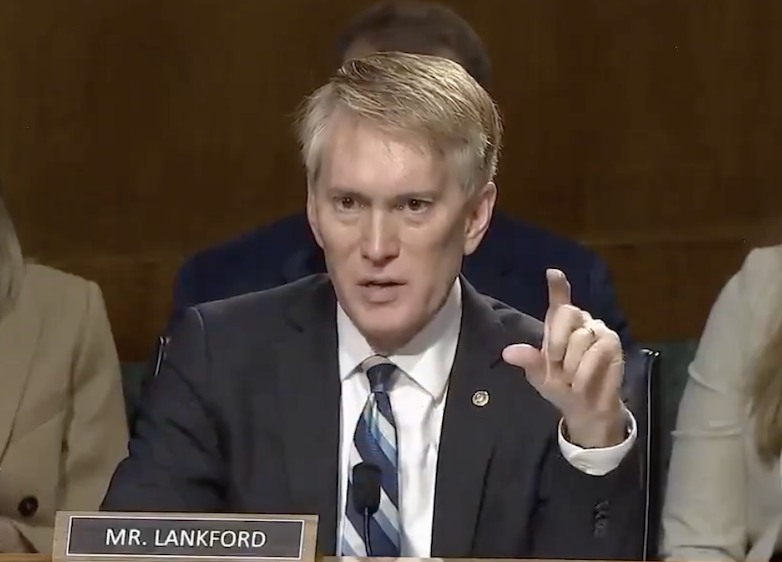
Oklahoma – Oklahoma Sen. James Lankford raised concerns about what he described as the growing terror threat from Iran during a Senate Intelligence Committee confirmation hearing, questioning President Donald Trump’s nominee for Director of National Intelligence about how he would address national security challenges if confirmed.
Lankford, a member of the Senate Intelligence Committee, questioned Jay Clayton, President Trump’s nominee to lead the Office of the Director of National Intelligence (ODNI), on issues ranging from Iran-backed terrorism to intelligence gathering and the future structure of the nation’s intelligence community.
During the hearing, Lankford said the United States has faced terrorism threats from Iran and its proxy organizations for decades.
“You have handled terrorism cases coming straight out of Iran and threats that have come to us,” Lankford said. “For 47 years, the United States and American citizens all around the world have faced terrorism threats from Iran and the growth of the proxy terror organizations.”
The Oklahoma senator asked Clayton how his experience prosecuting terrorism, money laundering, espionage, and organized crime cases in the Southern District of New York would influence his leadership of the intelligence community if confirmed.
Clayton responded that the threat posed by Iran is real and requires continued vigilance.
“The threat’s real. It’s not hypothetical,” Clayton said during the hearing. “They intend to do our citizens harm. They are well funded, and they are well funded through channels that we need to do a better job of monitoring.”
Clayton added that while traditional banking systems are generally well monitored, authorities must continue improving oversight of newer methods of moving money, including digital asset platforms and other emerging financial channels that could be used to finance terrorism.
Lankford also questioned Clayton about how he would manage the Office of the Director of National Intelligence, noting that the agency has grown significantly since it was established following the Sept. 11, 2001, terrorist attacks.
The senator asked how Clayton would determine whether the office is appropriately staffed and organized while ensuring it continues to effectively coordinate intelligence across the federal government.
Clayton said the mission of the intelligence community is to provide policymakers with the best possible intelligence rather than to establish policy itself.
He compared the Office of the Director of National Intelligence to a corporate board of directors, explaining that its primary responsibility is oversight and integration of intelligence agencies rather than managing their day-to-day operations.
According to Clayton, maintaining a lean organization while relying on reporting from individual intelligence agencies allows leadership to focus on strategic oversight instead of becoming involved in operational responsibilities.
Lankford also asked how Clayton’s experience as a federal prosecutor and former chairman of the Securities and Exchange Commission would shape his approach to leading the intelligence community.
Clayton said his experience as both a consumer and user of intelligence products would help him understand what policymakers need when making national security decisions. He added that he looks forward to working closely with intelligence professionals to ensure decision-makers receive clear, timely, and accurate information.
The Office of the Director of National Intelligence was established by Congress in 2004 following recommendations from the 9/11 Commission to improve coordination among the nation’s intelligence agencies. The director oversees and integrates the work of the U.S. intelligence community, which includes 18 agencies and organizations responsible for collecting and analyzing intelligence related to national security.
If confirmed by the Senate, Clayton would oversee the nation’s intelligence coordination efforts and advise the president on intelligence matters, including threats posed by foreign adversaries such as Iran, China, Russia, and terrorist organizations.
Lankford has frequently emphasized national security, border security, and counterterrorism as priorities during his service on the Senate Intelligence Committee, and his questioning of Clayton focused on ensuring the intelligence community remains prepared to address evolving threats facing the United States.