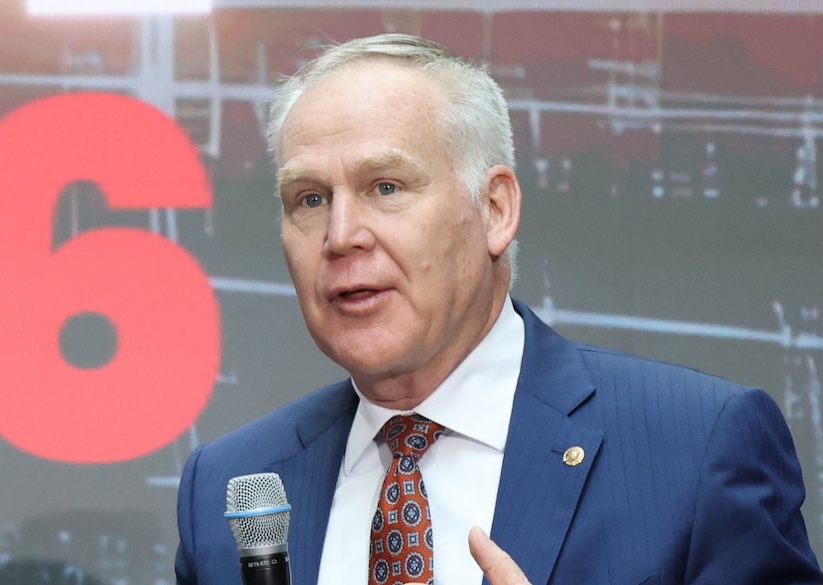
Oklahoma – U.S. Sen. Alan Armstrong said he plans to spend the remainder of his time in the Senate advancing permitting reform, calling it the most important action Congress can take to strengthen the nation’s long-term energy security and economic future.
In a post on X, formerly Twitter, Armstrong said he has “six months left in the United States Senate” and intends to use that time to push for what he described as meaningful permitting reform.
“I have six months left in the United States Senate and I intend to use every moment of that time to advance meaningful permitting reform that will strengthen our energy security and help this nation build again,” Armstrong wrote. “This is the single most important thing Congress could do for America’s long-term future.”
Armstrong made the remarks while thanking Washington Reporter Editor-in-Chief Matthew Foldi for an interview published by the outlet that focused on his efforts to overhaul the nation’s permitting process.
During the interview with the Washington Reporter, Armstrong said he remains optimistic Congress can pass bipartisan permitting reform before his term ends, arguing that changes to the current permitting system are essential to expanding American energy production and infrastructure.
“We really need to get back to where we have an abundance of energy available, not constraints that we’ve let develop around ourselves,” Armstrong told the publication. He said permitting reform should benefit multiple industries, including oil and gas, solar, hydropower and electric transmission, rather than favoring only one sector.
The Oklahoma Republican also emphasized the importance of bipartisan cooperation, saying lawmakers must work across party lines if they hope to pass significant legislation. Armstrong told the outlet that permitting reform is not a “zero-sum game” and argued there is an opportunity to create a package that benefits a broad range of energy producers and infrastructure developers.
Armstrong’s comments follow his introduction of the American Energy and Mineral Infrastructure Act of 2026, a legislative package aimed at streamlining the federal permitting process for energy infrastructure projects. The proposal would designate the Federal Energy Regulatory Commission as the lead agency for interstate pipeline approvals, limit permitting delays, reform environmental reviews under the National Environmental Policy Act, and establish clearer timelines for project approvals.
Supporters of the legislation argue the current permitting process can delay major infrastructure projects for years, increasing costs and slowing domestic energy development. Armstrong has said reducing unnecessary regulatory hurdles would strengthen American energy independence, improve infrastructure development and help the United States remain competitive globally.
During the interview, Armstrong reflected on his limited time in office, saying he hopes to be remembered for focusing on long-term issues rather than short-term political debates. He encouraged current and future lawmakers to prioritize bipartisan relationships and policies that address systemic challenges facing the country.
While the permitting reform proposal has received support from several Republican senators and energy industry groups, it would still need approval from both chambers of Congress before it could be signed into law. Armstrong said he intends to continue making the issue his top legislative priority during the remainder of his Senate term.