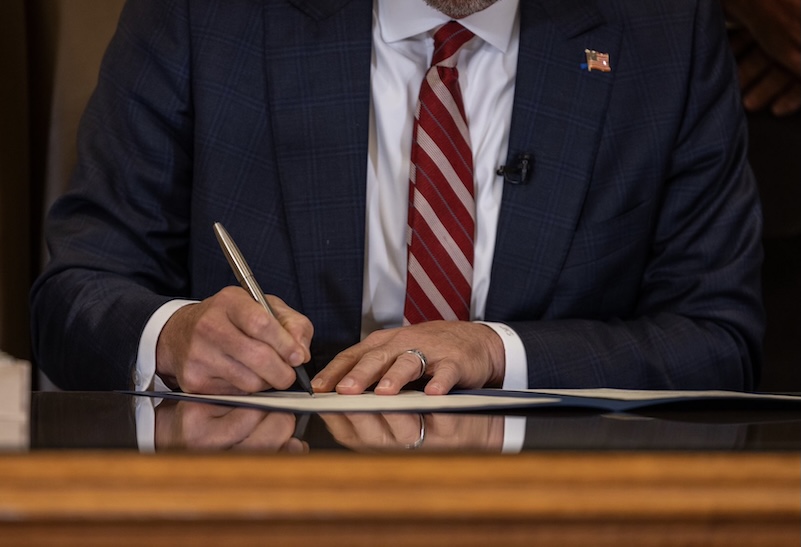
Oklahoma – The State of Oklahoma has enacted a major expansion of its school choice program after Gov. Kevin Stitt signed House Bill 3705 into law, increasing the funding cap for the Parental Choice Tax Credit program to $275 million.
According to the announcement, the legislation is intended to expand educational options for families across the state by allowing more students to access refundable tax credits ranging from $5,000 to $7,500 per student. State officials said the program has already served nearly 40,000 students this year, with demand continuing to grow.
Gov. Stitt said the measure reflects his broader goal of expanding educational freedom in Oklahoma. In a statement, he said the law “levels the playing field” and gives parents greater ability to choose the best education for their children, emphasizing that education decisions should rest with families.
The Parental Choice Tax Credit program was originally established in 2023 and is designed to provide financial support to families seeking alternatives to traditional public schooling, including private and other education options.
State officials also highlighted the role of the Oklahoma School Choice Hub, developed under the leadership of Secretary of Education Dan Hamlin. The online platform allows parents to compare and explore school options across the state in one centralized location.
Supporters of the law say the expansion reinforces Oklahoma’s position as a national leader in school choice policy, while expanding access to education alternatives for thousands of additional families.
The bill’s signing marks one of the most significant recent expansions of education policy in Oklahoma, with state leaders framing it as a continued effort to prioritize parental decision-making in education.