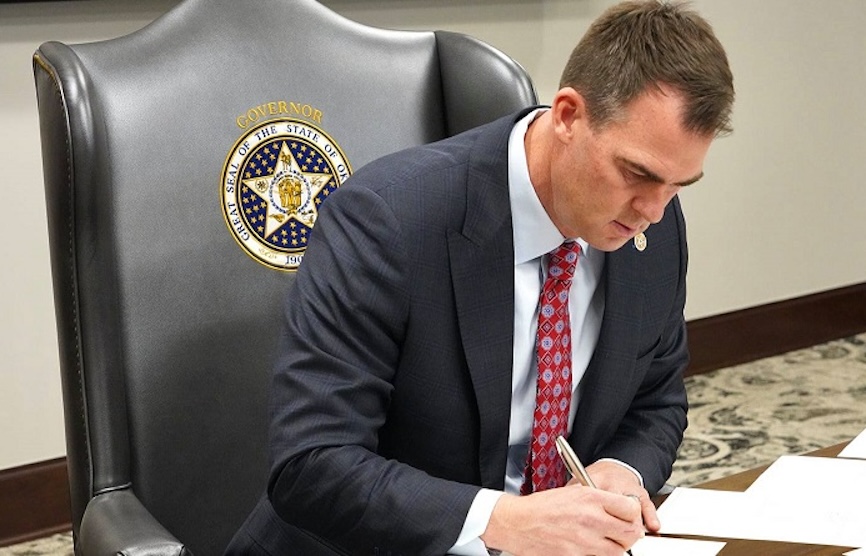
Oklahoma – Oklahoma Gov. Kevin Stitt is facing renewed political scrutiny after state records and investigative reporting raised questions about a $2 billion investment advisory contract awarded through the state’s new Invest in Oklahoma program, a system designed to steer pension and public trust money into in-state investments.
According to multiple reports from outlets including Journal Record and state government disclosures, Kevin Stittvoted as chairman of the Invest in Oklahoma board on Feb. 17 in favor of selecting 311 Capital Management LLC as the state’s investment adviser.
The firm was founded by Bond Payne, a former chief of staff to Stitt and a previous business partner in a downtown Oklahoma City real estate project. Payne also previously worked closely with Stitt during the governor’s first term in office.
The advisory contract gives 311 Capital the ability to help guide investments tied to more than $2 billion in state pension funds, endowments, and sovereign wealth assets. Under the agreement, the firm would earn fees based on successful investments it brings before the board.
State Treasurer Todd Russ, who also serves on the board alongside Stitt, defended the selection process, saying it followed a competitive bidding structure. However, reporting indicates that Payne’s prior relationship with the governor was not discussed during public deliberations.
Russ said in interviews with state media outlets that the process was repeated twice and included multiple safeguards to ensure fairness. He also emphasized that the board was under pressure to find a firm willing to operate without large upfront fees due to limited administrative funding.
“We definitely went through the competitive bid process, and as a matter of fact, we went through it twice,” Russ said, adding that officials wanted to ensure the process remained “above board.”
Despite those assurances, critics have pointed to concerns about transparency and potential conflicts of interest, especially given Stitt’s past financial ties to Payne’s business ventures.
Financial disclosures reviewed by Oklahoma ethics officials show Stitt previously held a minority investment interest in JRB Citizen LLC, a company tied to Payne that developed The Citizen building in downtown Oklahoma City. According to Chief of Staff Donelle Harder, Stitt divested his interest in 2024 after construction on the project was completed and later updated his disclosure filings in 2026 to reflect that change.
Harder also stated that Stitt “holds no financial interest today in any entity owned by Bond Payne,” addressing questions raised in the reporting.
Still, watchdog groups and political observers say the overlap between personal relationships and state financial decisions could become a major issue as Oklahoma heads toward the 2026 election cycle. The advisory contract alone positions 311 Capital to influence investment decisions tied to billions in public funds, intensifying scrutiny of how the Invest in Oklahoma program is managed.
The program itself was created under the 2021 Invest in Oklahoma Act, a Republican-backed initiative encouraging state pension systems to invest a portion of assets in Oklahoma-based firms. Supporters argue the approach strengthens the state economy by keeping capital local and supporting in-state growth industries such as real estate, private equity, and infrastructure development.
Since its creation, the program has been shifted between agencies before landing under the state treasurer’s office, where a five-member board now oversees its operations. The board includes Stitt, Russ, Lt. Gov. Matt Pinnell, and legislative appointees Brady Sidwell and Zack Hall.
The controversy comes as Oklahoma is also moving forward with broader fiscal reforms, including a proposed Taxpayer Endowment Trust Fund tied to House Bill 4072. That fund is intended to grow state savings through long-term investments and potentially offset income tax revenue in the future.
Stitt has framed both initiatives as part of a long-term strategy to modernize Oklahoma’s finances. At a recent press conference, he said the goal is to build a sovereign wealth-style system similar to those used in states like Alaska and Texas.
“This is a fund to lock up savings for generations,” Stitt said. “We think it’s really important that we protect this savings account and invest it for future Oklahomans.”
However, the growing scope of state-managed investment programs, combined with questions about contract awards and past business relationships, has added political pressure on the governor as he approaches the final stretch of his term.
With billions of dollars in public assets now flowing through newly structured investment boards, transparency and accountability are expected to remain central issues in Oklahoma politics heading into 2026.