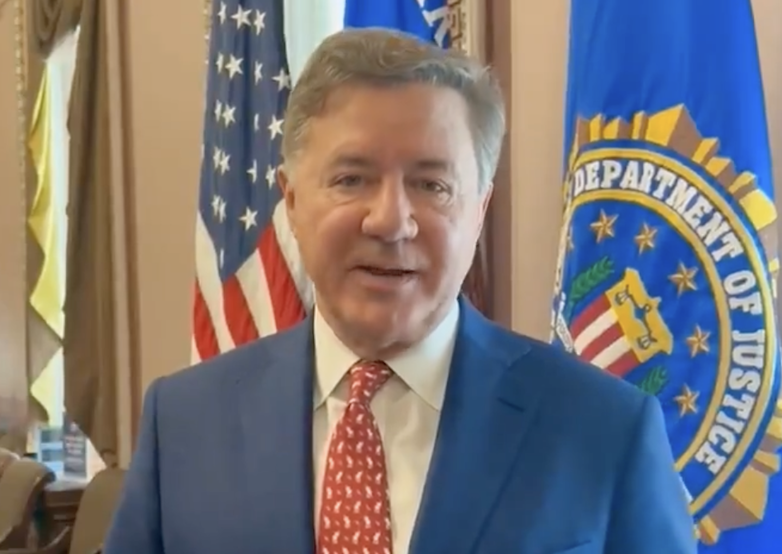
Oklahoma – Oklahoma Attorney General Gentner Drummond says ruling is ‘another victory for the values of our state’ after state Supreme Court blocks gender changes on birth certificates
“I’m proud of my efforts to uphold the U.S. and Oklahoma Constitutions and defend our God-given rights in court,” Oklahoma Attorney General Gentner Drummond said after the Oklahoma Supreme Court ruled that state law does not allow changes to the gender designation on Oklahoma birth certificates. “This ruling is another victory for the values of our state.”
The Oklahoma Supreme Court issued the 6-3 ruling Sept. 29 in a case involving three transgender Oklahomans who sought to change the gender designations on their birth certificates. The case reached the state Supreme Court after the U.S. 10th Circuit Court of Appeals asked the Oklahoma justices to answer questions about how state law applies to changes in birth-certificate gender designations.
The case, Fowler v. Stitt, involved Rowan Fowler, Allister Hall and Carter Ray, who had sought to have the gender designations on their Oklahoma birth certificates changed to match their gender identities. According to the court record, the individuals had obtained state court orders directing changes, but the Oklahoma State Department of Health denied the applications, citing an executive order issued by Gov. Kevin Stitt in 2021.
The Oklahoma Supreme Court was asked to answer three questions concerning state law. The justices concluded that Oklahoma law prohibits changes to the gender designation on a birth certificate, that the law has never permitted such changes and that it has never permitted changes based on gender identity, per reports.
The court focused heavily on Oklahoma Statute 63 O.S. § 1-321, which governs amendments to birth certificates. The justices noted that the statute identifies specific circumstances under which a birth certificate may be amended, including certain name changes and paternity-related changes.
The court also examined amendments made to the law in 2022 and 2026. The 2026 version states that an amended birth certificate must contain an accurate biological gender designation of either male or female as identified at birth and cannot be amended to display gender identity, a nonbinary designation or an “X” designation. The court concluded, however, that the statute does not authorize changing a person’s original gender designation from male to female or female to male.
The court further concluded that Oklahoma law did not previously authorize such changes, despite evidence that some individuals had obtained state court orders directing the Oklahoma Department of Health to amend birth certificates beginning around 2007. The justices said the practice had continued for years but determined that the underlying statute never actually provided legal authority for those changes.
The ruling was described by Oklahoma Voice, published through KGOU, as a decision establishing that state law has never allowed changes to the gender designation on Oklahoma birth certificates. The outlet reported that the ruling came after the 10th Circuit sought answers from the Oklahoma Supreme Court in the lawsuit brought by the three transgender plaintiffs.
Drummond’s office had represented the state officials involved in the case, including Stitt, Oklahoma State Department of Health Commissioner Keith Reed and State Registrar of Vital Records Kelly Baker. The attorney general’s office argued that Oklahoma law did not authorize the requested amendments.
The ruling also comes after Oklahoma lawmakers amended the state’s birth-certificate law in 2026. The plaintiffs argued that the newer law could distinguish between transgender and cisgender people seeking changes, while state officials argued that the legislation clarified existing law and confirmed that Oklahoma had never authorized changes to gender designations. The Supreme Court adopted the state’s interpretation.
The decision does not represent a ruling by the Oklahoma Supreme Court on the broader constitutional claims originally raised by the plaintiffs. Instead, the court answered the specific questions of Oklahoma state law that had been certified by the 10th Circuit. The federal litigation can continue based on those answers.
For Drummond, the ruling marked another legal victory involving Oklahoma’s restrictions concerning gender identity. His latest statement framed the decision as part of his efforts to defend the state and federal constitutions and what he described as “God-given rights.”
The Oklahoma Supreme Court’s decision is subject to revision or withdrawal until the opinion is formally released for publication, according to the court opinion.