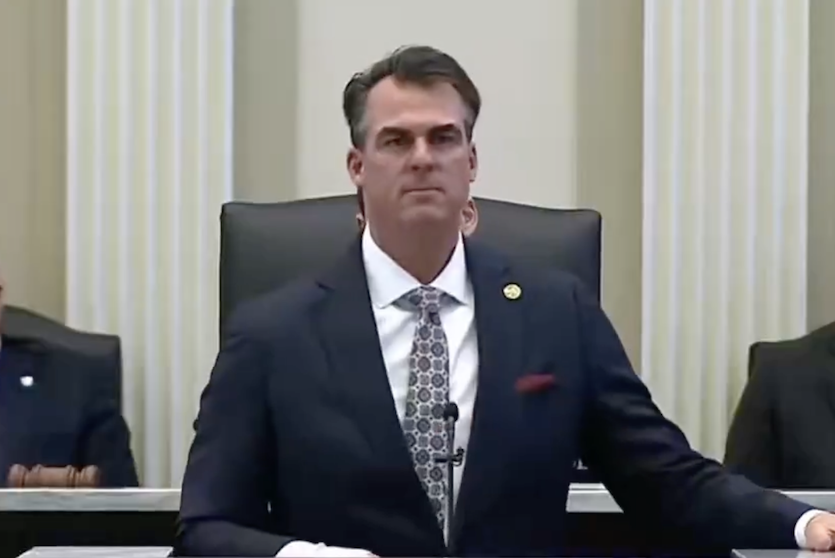
Oklahoma – “Oklahoma feeds the world, however our farmers and ranchers are facing unprecedented challenges as we head into harvest season,” Oklahoma Gov. Kevin Stitt said as he called for temporary relief from enforcement involving dyed diesel fuel, arguing that rising fuel costs are putting additional pressure on agricultural producers and eventually consumers at grocery stores.
Stitt issued the request in a Sept. 28 letter to the Oklahoma Tax Commission, Oklahoma Department of Public Safety and Oklahoma Corporation Commission, asking the agencies to temporarily adjust their enforcement priorities involving dyed diesel used by farmers, ranchers and agricultural producers. The request would remain in place for 120 days.
“As their costs increase, so do our prices at the grocery store,” Stitt said. “The state should ease burdens where it can in order to provide relief for the industry, and for Americans trying to feed their families.”
Under Stitt’s request, the Oklahoma Tax Commission would seek dyed diesel fuel penalty relief from the Internal Revenue Service for qualifying Oklahoma users. The governor also asked the agency to take lawful steps to facilitate the reporting and payment of applicable state taxes during the temporary period.
Stitt separately asked the Oklahoma Department of Public Safety and the Corporation Commission to refrain from initiating inspections, citations or other enforcement actions based solely on the presence or use of dyed diesel in highway vehicles during the 120-day period.
News 9 reported that Stitt’s request was aimed at providing financial relief to farmers and ranchers during harvest season as diesel prices remain elevated. The outlet reported that the governor was asking the three agencies to adjust their enforcement priorities for 120 days while also seeking federal penalty relief through the IRS.
KFOR reported that farmers welcomed the potential relief but said high diesel prices were only one of several financial pressures facing Oklahoma agriculture. Oklahoma Farm Bureau President Stacy Simunek said the measure could help producers using red-dyed fuel, while American Farmers and Ranchers/Oklahoma Farmers Union President Scott Blubaugh said farmers were also dealing with higher fertilizer and interest costs.
Simunek told KFOR that the industry was facing difficult conditions as fuel prices remained high and commodity prices moved in the opposite direction. Blubaugh similarly said the cost of diesel needed to come down more broadly because producers were having difficulty making a profit.
The issue has become part of a broader response to sharply higher diesel prices across the country. Reuters reported that diesel prices had reached record levels and that several states, including Oklahoma, Alabama, Louisiana and Nebraska, had moved to ease restrictions involving red-dyed diesel. The White House was also considering broader changes involving the use of dyed diesel as part of efforts to address fuel costs.
Red-dyed diesel is generally used for tax-exempt off-road purposes, including agricultural equipment, and is subject to different tax treatment from diesel intended for highway use. Its red color allows authorities to distinguish it from fuel intended for taxed on-road use.
The Oklahoman reported an important limitation to Stitt’s action, noting that his move was a letter requesting action from state agencies rather than an executive order. The newspaper also reported that an Oklahoma Corporation Commission spokeswoman said the agency does not have jurisdiction over the use of dyed diesel on roadways, meaning there may be no enforcement action for the commission to suspend in that area. The commission said its Petroleum Storage Tank Division would continue inspecting facilities where dyed diesel is sold.
The Oklahoman also reported that the governor’s request does not itself change federal rules governing dyed diesel. Stitt asked the Oklahoma Tax Commission to seek penalty relief from the IRS, but the federal government had not announced that such relief had been granted at the time of the report.
Stitt’s office said the temporary approach was intended to allow state enforcement resources to focus on public safety while reducing burdens on producers bringing crops and livestock to market.
“Oklahoma agriculture is essential to our economy and our way of life,” Stitt wrote in the letter. He argued that producers were confronting extraordinary fuel costs at a critical point in the agricultural calendar and that temporary relief could help them continue harvesting and transporting agricultural products.
Oklahoma House Agriculture Committee leaders also backed the governor’s action. Reps. Kenton Patzkowsky and Rick West thanked Stitt for the 120-day pause, saying the relief was needed by agricultural producers and that savings could extend to people who rely on the food and other products produced by Oklahoma farmers and ranchers.
The debate over dyed diesel comes as Oklahoma farmers enter an important harvest period while dealing with higher operating expenses. Stitt has framed the issue not only as agricultural relief but also as a potential way to reduce some of the cost pressures that eventually reach consumers.
For now, the governor’s request involves temporary state enforcement changes and a request for federal penalty relief. The extent of the relief will depend on how the Oklahoma agencies respond and whether federal authorities approve the requested IRS relief.