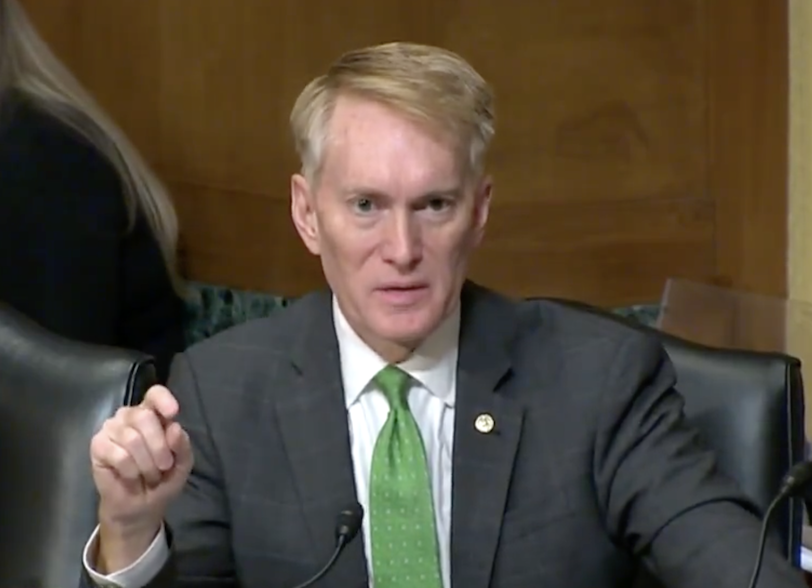
Oklahoma – Oklahoma Sen. James Lankford says nearly $30 billion worth of projects in his state are stuck waiting for federal permits, arguing that lengthy government approval processes are driving up costs for Americans as Congress takes action on a major bipartisan permitting reform bill. “Gas, electricity, and construction cost too much in America. The wasted time and money of federal permitting absolutely drives up the cost of everything,” Lankford reportedly said.
“Tonight, Congress took action. Nearly $30 billion in Oklahoma projects are stuck waiting on federal permits. This bill updates the permitting process so government can get out of the way and let Americans build again at a lower cost,” he continued, describing the legislation as a step toward creating more jobs, higher wages and economic growth across the country.
The Republican senator was referring to the Bipartisan American Affordability and Jobs Act of 2026, known as BAAJA, which the Senate passed Thursday in a 62-33 vote. The legislation is designed to overhaul federal permitting procedures and speed up approvals for major energy and infrastructure projects. It now heads to the House of Representatives, where lawmakers will have to decide whether to advance the Senate-approved version.
According to figures released by Lankford’s office, approximately $29.7 billion in Oklahoma projects are currently waiting in the federal permitting process. His office also estimates that permitting delays cost Oklahoma manufacturers $161 million annually, while projects held up in the approval process represent an estimated $55 billion in total economic impact, including jobs, in-state spending and tax revenue.
The legislation seeks to address delays that can hold up construction for years, affecting projects involving power plants, electricity transmission lines, renewable energy, oil and gas development, mining and other infrastructure.
The Associated Press reported that the bill would shorten the timeline for launching major energy projects as lawmakers look for ways to increase electricity supplies and respond to rising utility costs. It also includes provisions requiring data centers to pay for the energy they consume, an issue that has attracted growing attention as electricity demand rises. Supporters argue that lengthy permitting reviews make infrastructure more expensive, discourage investment and prevent projects that could expand the nation’s energy supply from moving forward. They say the changes could help developers build power generation and transmission infrastructure more quickly, potentially easing pressure on electricity prices.
The bill has received support from industry groups representing both traditional energy companies and clean energy developers. CBS News reported that supporters see the legislation as a way to make it easier to build renewable energy and fossil fuel projects, as well as the high-voltage transmission lines needed to deliver electricity. However, the legislation has also faced significant opposition, particularly from environmental groups and Democratic lawmakers who argue that its changes could weaken existing environmental protections and limit opportunities for communities to challenge federal project approvals.
The AP reported that critics have raised concerns about changes involving the National Environmental Policy Act, the Clean Water Act and the Endangered Species Act. They warn that reducing review requirements and limiting legal challenges could make it easier for fossil fuel projects to advance while increasing risks to public health, land and water resources. The debate also became contentious during the Senate’s consideration of the legislation. Oregon Democratic Sens. Ron Wyden and Jeff Merkley sought votes on amendments, including a proposal to prohibit data centers on public lands. Republicans blocked efforts to consider several amendments, and the bill ultimately passed without the additional changes sought by individual senators.
Roll Call reported that the Senate’s passage followed years of negotiations over federal permitting reform, with lawmakers from both parties involved in developing the package. The legislation was negotiated by Republican Sens. Mike Lee and Shelley Moore Capito and Democratic Sens. Martin Heinrich and Sheldon Whitehouse. For Lankford, the legislation represents an opportunity to address delays affecting projects in Oklahoma and across the country. His office estimates that between $1.1 trillion and $1.5 trillion in potential investments nationwide are waiting for federal permitting decisions, with billions more in annual costs attributed to delays. The Senate vote marks a major step for the legislation, but it does not mean the proposal has become law. The House must still consider the measure before it can reach President Donald Trump for his signature.
"This bill lets Americans build again at a lower cost," Oklahoma Sen. Lankford celebrates major Senate move, argues lengthy permitting delays are driving up costs for Americans