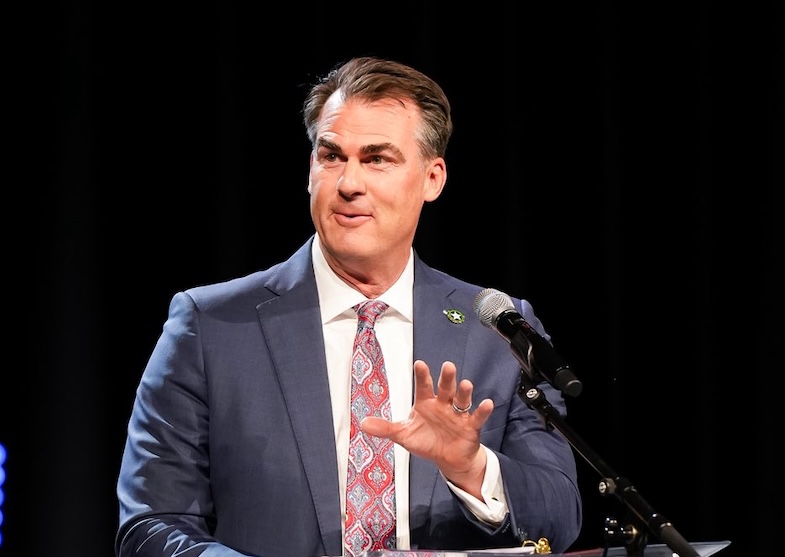
Oklahoma – Gov. Kevin Stitt is calling for greater transparency in political advertising as artificial intelligence becomes an increasingly powerful tool in election campaigns, arguing that voters should be able to make decisions based on candidates’ policies rather than potentially misleading AI-generated content.
“The truth still matters in Oklahoma — this AI issue is about transparency,” Stitt wrote in a June 8 post on X. “Candidates should win based on their policies, not based on misleading AI ads and deepfakes.”
The governor’s comments come amid a growing debate nationwide over the use of artificial intelligence in political campaigns and followed a recent appearance on CNN, where he discussed concerns about AI-generated political advertisements and the lack of clear regulations governing their use. During the interview, Stitt said he is considering calling a special legislative session to address the issue after Oklahoma lawmakers adjourned without passing significant legislation related to AI-generated political content.
According to reports, Stitt’s concerns were heightened after AI-generated political advertisements began appearing in Oklahoma’s gubernatorial race. One widely discussed ad used artificial intelligence to depict a candidate in a fabricated political scenario, raising questions about how voters can distinguish between authentic campaign messaging and digitally manipulated content.
Speaking to CNN, Stitt said the issue is not about limiting political speech but about ensuring voters have accurate information. He argued that transparency requirements could help voters understand when content has been generated or altered by artificial intelligence.
The debate unfolding in Oklahoma reflects a broader national conversation. Across the country, lawmakers and election officials have been grappling with the rapid advancement of generative AI technology, which can create realistic images, audio recordings, and videos that appear authentic despite being entirely fabricated. Experts have warned that such content can make it difficult for voters to distinguish fact from fiction during election campaigns.
According to the National Conference of State Legislatures, dozens of states have adopted some form of regulation addressing AI-generated political content, with many requiring disclosures when deepfakes or synthetic media are used in campaign communications. Oklahoma, however, has not yet enacted comprehensive rules specifically governing the use of AI in political advertising.
Stitt noted during his CNN interview that roughly half of U.S. states have implemented some type of AI disclosure requirement, and he suggested Oklahoma should consider similar safeguards. The governor has emphasized that his primary concern is ensuring voters are not misled by realistic but fabricated content during election campaigns.
The issue has gained urgency as AI-generated campaign materials become more sophisticated. A recent Reuters report highlighted growing concerns among election experts that deepfake videos and manipulated audio clips could undermine voter confidence and trust in democratic institutions. The report noted that many political advertisements now include AI-generated elements and that existing regulations vary significantly from state to state.
While lawmakers across the political spectrum continue debating how far regulation should go, Stitt has framed the discussion around transparency rather than censorship. He has argued that voters deserve to know when artificial intelligence has been used to create or alter campaign content and that election outcomes should be determined by policy positions and candidate qualifications.
As Oklahoma officials continue evaluating potential legislative options, the governor has signaled that additional action may be necessary if AI-generated political advertising continues to expand without clear disclosure requirements. For now, Stitt says the issue comes down to a simple principle: ensuring that truth and transparency remain central to the electoral process.