Oklahoma – Gov. Kevin Stitt is highlighting Oklahoma’s growing role in national manufacturing and supply chain security, arguing that a major aluminum project planned for northeast Oklahoma could play a key role in reducing U.S. dependence on foreign suppliers.
In a June 7 post on X, Stitt praised President Donald Trump’s support for the project and framed it as more than an economic development initiative.
“POTUS knew Oklahoma had what our country needed to secure our supply chain when he championed this project. It’s one of his top priorities,” Stitt wrote. “This is about more than an aluminum processing plant. This is about America’s future and our national security. Oklahoma has what it takes.”
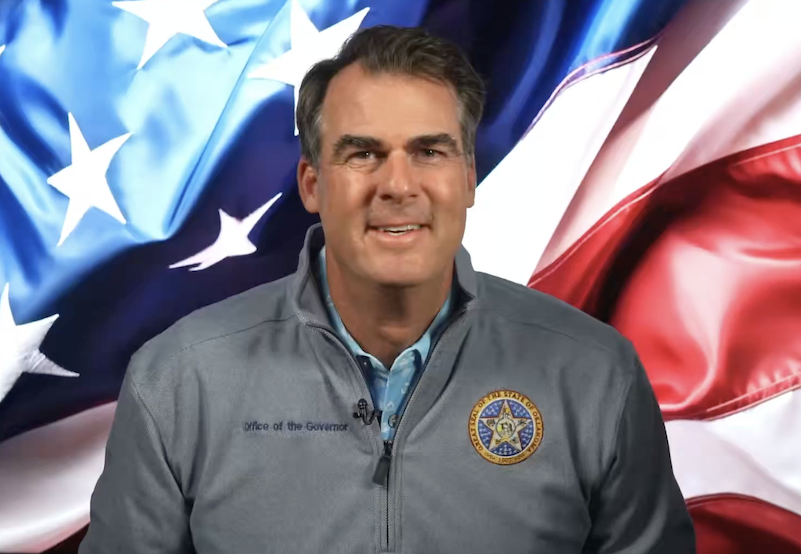
The governor’s comments accompanied a video message in which he described aluminum production as a critical national security issue and warned about the United States’ reliance on overseas supply chains.
According to Stitt, the project represents a major step toward rebuilding American manufacturing capacity and reducing dependence on foreign aluminum production, particularly from China.
“President Trump believed that Oklahoma was the best state to center this effort when he chose us to build the first aluminum processing facility since 1980,” Stitt said in the video. He added that China currently accounts for a significant share of global aluminum production and argued that many military and industrial products depend on reliable access to the metal.
Aluminum is widely used in aerospace, transportation, construction, electronics, packaging, and defense manufacturing. Industry experts often classify it as a strategically important material because of its role in military aircraft, naval vessels, armored vehicles, and other critical infrastructure.
The project Stitt referenced is the planned aluminum smelter in Inola, Oklahoma, being developed through a partnership between Emirates Global Aluminium and Century Aluminum. The facility would be the first new primary aluminum smelter built in the United States since 1980 and is expected to significantly increase domestic production capacity.
Federal officials have also emphasized the project’s significance. Earlier this year, the U.S. Department of Energy announced support for the development, describing it as an important effort to reduce reliance on imported aluminum and strengthen domestic manufacturing. The department said the facility could become the largest primary aluminum production plant in the nation and help expand supplies for industrial and defense-related uses.
Project developers have stated that the facility is expected to produce approximately 750,000 metric tons of aluminum annually, more than doubling current U.S. primary aluminum production. Plans call for the creation of roughly 1,000 permanent jobs and approximately 4,000 construction jobs during development.
The project is part of a broader effort by Oklahoma leaders to attract manufacturing and critical minerals investments to the state. Recent years have seen multiple announcements involving battery materials, rare earth elements, and other supply chain-related industries as officials seek to position Oklahoma as a hub for strategic manufacturing.
Supporters of the aluminum project argue that increasing domestic production will strengthen supply chain resilience, create jobs, and improve national security by reducing dependence on foreign suppliers. Critics, however, have raised concerns about environmental impacts and foreign ownership interests, leading to ongoing legal and political debates surrounding the development.
Despite those challenges, Stitt has continued to champion the project, describing it as a transformational opportunity for Oklahoma and a key component of broader efforts to restore American manufacturing capacity.
“This is about America’s future and our national security,” the governor said. “Oklahoma has what it takes.”