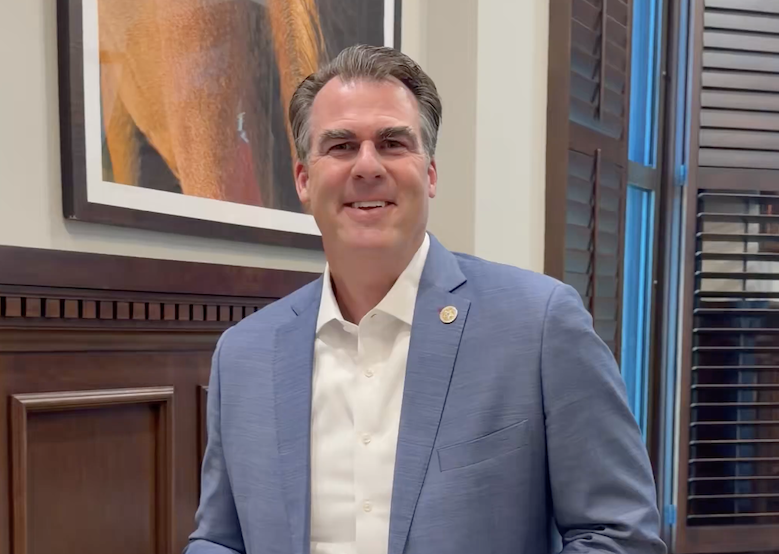
Oklahoma – Governor Kevin Stitt praised the Oklahoma Legislature for quickly advancing legislation aimed at preparing the state for potential changes to federal fuel tax policy under President Donald J. Trump.
According to a statement from the governor, both chambers of the Legislature acted swiftly on House Bill 1370, a measure designed to remove a state law that would have automatically increased Oklahoma’s gasoline tax if the federal gas tax were reduced or suspended.
Stitt said the legislative response was necessary to ensure that Oklahomans would fully benefit from any potential federal tax relief without being offset by a corresponding state tax increase.
“Should President Trump move to suspend the federal gas tax, Oklahomans will now truly benefit from this relief due to rapid action taken today at the Capitol,” Stitt said. He also credited members of his administration for identifying the law and praised Republican legislative leaders for acting quickly in response.
House Bill 1370 repeals a provision in Oklahoma Statutes Title 68, Section 500.4A, which previously directed the state to adjust fuel excise taxes if the federal government reduced or eliminated its own gas tax.
Supporters of the measure described it as a modernization effort intended to eliminate what the governor referred to as an “antiquated trigger law.” The change prevents automatic increases in state fuel taxes tied to federal policy decisions.
The governor’s office framed the action as part of a broader effort to align state policy with anticipated federal tax changes and to ensure Oklahoma drivers are not negatively affected by overlapping tax adjustments.
Stitt emphasized that the legislation reflects coordination between the executive branch and legislative leaders to respond quickly to potential federal policy shifts. He characterized the action as supporting broader “America First” economic priorities while protecting Oklahoma taxpayers.
The bill’s passage marks another example of state-level lawmakers responding to possible federal policy changes, particularly in areas involving taxation and energy policy.
Officials said the measure now positions Oklahoma to avoid automatic fuel tax increases tied to federal adjustments, pending any future changes at the national level.