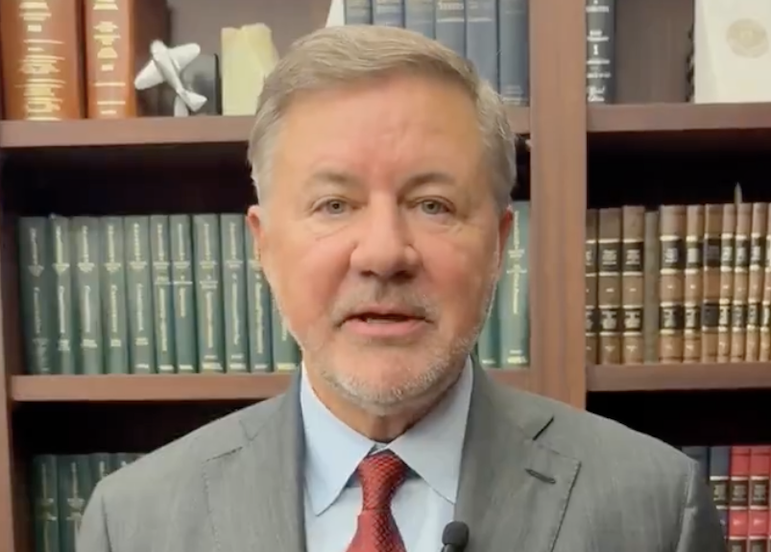
Oklahoma – “If people thought I’d back down from defending local communities against the overreach of special interests and Washington, D.C., then they were sorely mistaken. This fight against the proposed aluminum smelter in Inola is worth having, and we will win for the sake of future generations of Oklahomans,” Oklahoma Attorney General Gentner Drummond said as the legal fight over a massive proposed aluminum smelter in Inola moved back to state court.
Drummond’s comments came after a federal judge ruled that his lawsuit seeking to stop the proposed Oklahoma Primary Aluminum project should be returned to Rogers County District Court. The decision was a significant development in the ongoing battle over the project, which has drawn opposition from Drummond and support from other Oklahoma officials who argue the smelter could bring major economic and national security benefits.
The U.S. District Court for the Northern District of Oklahoma ruled Sept. 3 that the companies behind the project had not established a substantial federal question that would allow the lawsuit to remain in federal court. Judge Sara E. Hill ordered the case remanded to Rogers County, where Drummond originally filed the lawsuit in June, per reports.
The federal court’s order was final and could not be appealed, according to Drummond’s office. The ruling did not determine whether the smelter can ultimately be built or whether Drummond’s claims about potential health, environmental and agricultural impacts will succeed.
“This case belongs in Oklahoma state court under Oklahoma law,” Drummond said following the ruling. “I will continue to fight for the people of Inola and for what is in the best interests of all Oklahomans.”
The lawsuit targets Century Aluminum Company and Aluminum Oklahoma LLC, doing business as Oklahoma Primary Aluminum. Drummond has sought to stop construction and operation of the proposed facility through Oklahoma law, arguing that the project could create a public nuisance and threaten the health of nearby residents, livestock and natural resources.
The proposed smelter would be located near Inola in Rogers County and, if completed, would be the largest primary aluminum production facility in the United States, according to reporting by KJRH and state officials. The project is also expected to require more than 1,000 megawatts of continuous electricity.
Ownership of the project has also become a major point of controversy. Emirates Global Aluminium, a state-owned enterprise of the United Arab Emirates, holds a 60% controlling interest, while Century Aluminum holds the remaining 40%, according to the Oklahoma Attorney General’s Office and KJRH.
Drummond has argued that the project could threaten surrounding agricultural operations and natural resources. In August, he asked a federal judge to temporarily block construction while his lawsuit proceeded, warning about potential pollution and its effects on the area.
His preliminary injunction filing cited projected emissions that included carbon monoxide, nitrogen oxides, particulate matter, volatile organic compounds, toxic air pollutants and fluoride compounds. Drummond’s office said an environmental expert involved in the case believed the facility could emit significant quantities of pollutants.
The smelter’s supporters have strongly pushed back against Drummond’s position. Gov. Kevin Stitt previously criticized the attorney general’s effort to block the project, arguing that the facility would expand manufacturing, strengthen the domestic aluminum supply chain and support what he described as President Donald Trump’s America First agenda.
The project has therefore become both an environmental and economic dispute, with opponents focusing on potential pollution and impacts on agriculture while supporters emphasize manufacturing, jobs, energy infrastructure and national security.
The latest court ruling does not settle that larger dispute. Instead, it determines where Drummond’s lawsuit will continue.
Oklahoma Voice reported that the federal judge’s decision returned the case to Rogers County because the lawsuit did not present a substantial federal jurisdictional issue. The publication also reported that the project’s ownership group had recently announced a new environmental plan that would significantly reduce projected fluoride emissions.
Drummond’s office has maintained that his claims are based on Oklahoma law and should therefore be decided by an Oklahoma state court. In August, he argued that the companies should not be able to use federal court to avoid state law or delay the state’s effort to protect residents, livestock and natural resources in Rogers County.
Now that the case has returned to Rogers County District Court, Drummond says he intends to continue the fight.
His Sept. 7 statement made clear that the court decision has not ended his opposition to the proposed smelter. Instead, Drummond framed the ruling as another step in a broader battle over the future of Inola and the authority of Oklahoma communities to challenge major industrial projects under state law.
The proposed aluminum smelter remains one of the most closely watched industrial projects in Oklahoma, with its future now set to be fought out in state court rather than federal court.
Oklahoma AG Drummond refuses to back down after court ruling, says those who thought he’d stop fighting were “sorely mistaken” and Oklahoma will win for the sake of future generations