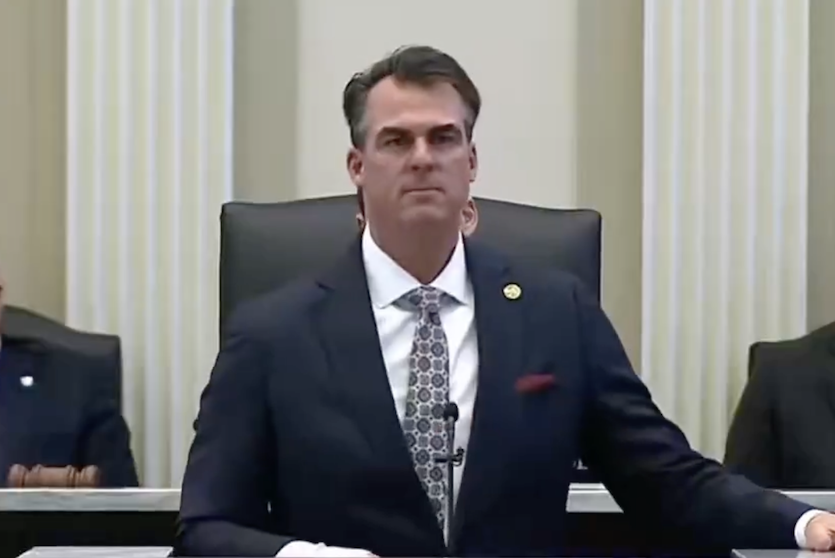
Oklahoma – Kevin Stitt signed a series of bills into law on April 23, 2026, including a measure that could significantly reshape the state’s tax structure by setting Oklahoma on a long-term path to eliminating its income tax.
The centerpiece of the legislation, House Bill 4072, establishes the Oklahoma Taxpayer Endowment Trust Fund, a state-managed investment fund designed to gradually replace revenue currently generated by income taxes. According to state officials and reporting from outlets including KRMG and KOSU, the plan calls for an initial investment of approximately $200 million from existing state savings.
Under the framework, those funds will be invested over time, with earnings partially directed into Oklahoma’s General Revenue Fund. Lawmakers supporting the bill say that as the fund grows, it could eventually offset the need for income tax collections, allowing for a gradual phase-out without immediate cuts to state services.
Stitt described the move as a defining moment for the state’s financial future. In a statement following the signing, he said the legislation reflects years of fiscal discipline and long-term planning.
“This is a pivotal moment for Oklahoma and our path to zero income tax,” Stitt said. “During my administration, we’ve been disciplined and we’ve built up over $3 billion in savings. This is about securing Oklahoma’s future, growing our savings wisely, investing responsibly, and leaving our state stronger for the next generation.”
Supporters of the measure argue that eliminating the income tax would make Oklahoma more competitive economically, potentially attracting new businesses and residents. The idea has been a long-standing goal among many conservative lawmakers in the state, who view lower taxes as a key driver of economic growth.
However, the plan is expected to be a major topic of debate heading into the 2026 election cycle. While proponents emphasize long-term benefits, critics have raised questions about whether investment returns can reliably replace a significant and consistent source of state revenue. Analysts note that income taxes currently fund essential services, including education, infrastructure, and public safety, and any transition away from that revenue stream would need to be carefully managed.
In addition to House Bill 4072, Stitt also signed House Bill 4043 and House Bill 4071, which focus on emergency response and financial opportunities for families.
House Bill 4043 allocates $1 million to Oklahoma Task Force 1, a specialized urban search and rescue team that responds to disasters across the state and nation. Officials said the funding will help support training, equipment, and deployment capabilities for future emergencies.
Meanwhile, House Bill 4071 establishes the Oklahoma Dream Accounts program, which provides children in the state with a $250 financial starting point through accounts tied to a broader initiative sometimes referred to as “Trump Accounts.” The program is designed to promote long-term savings and financial stability, with state leaders framing it as an investment in future generations.
In a public statement shared after signing the legislation, Stitt emphasized the broader vision behind the package of bills. He said the measures collectively demonstrate a commitment to long-term planning and economic growth.
“This is what it looks like when we govern with the future in mind,” he said. “Oklahoma is open for business and built to last.”
The combination of tax reform, emergency preparedness funding, and financial programs for children reflects a multi-pronged policy approach as Oklahoma leaders position the state for future growth. Still, the proposed path to eliminating the income tax is likely to remain the most closely watched aspect of the legislation.
Policy experts say the success of the endowment model will depend heavily on market performance and disciplined fiscal management over time. As the program develops, lawmakers and voters alike will be monitoring whether the investment strategy can deliver on its promise to replace one of the state’s primary revenue sources.
With the 2026 elections approaching and Stitt unable to seek another term due to term limits, the long-term tax plan is expected to play a central role in shaping political debates and defining the state’s economic direction in the years ahead.