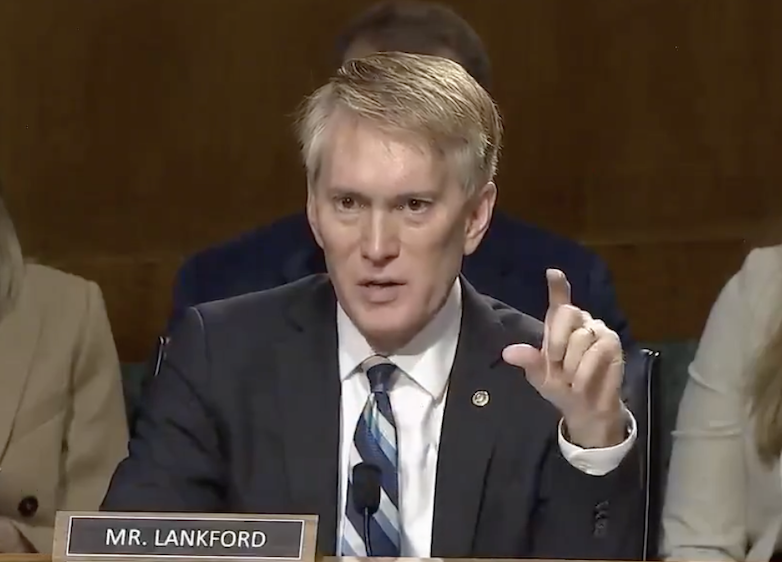
Oklahoma – Oklahoma Sen. James Lankford is criticizing a push to include language supporting the continued sale of intoxicating hemp-derived products in upcoming government funding legislation, arguing that lawmakers should not use an end-of-year spending measure to keep THC-infused gummies and beverages available at gas stations and convenience stores. In a November 25 post on X, Lankford raised concerns about the proposal as Americans were preparing to celebrate Thanksgiving, warning that the effort could undermine a decision Congress made a year earlier to restrict intoxicating hemp products.
“This week, when the country is preparing for Thanksgiving, there is a push to add language to the December 11 funding bill to support nationwide gas station marijuana in gummies and beverages,” Lankford wrote.
“A year ago, Congress said NO to legalizing ‘intoxicating hemp’ – which is clearly aimed at children,” he continued, adding that the government already spends too much and should not be supporting what he described as getting “wasted” on gas station THC drinks.
The senator’s comments come amid an intensifying dispute in Washington over the future of hemp-derived THC products, including Delta-8 and Delta-10 THC, which are commonly sold in gummies, beverages and other consumer products.
The controversy stems from the 2018 Farm Bill, which legalized hemp containing no more than 0.3% delta-9 THC by dry weight. However, the definition allowed manufacturers to develop intoxicating products using other hemp-derived cannabinoids that can produce effects similar to marijuana.
Congress subsequently approved restrictions intended to close that loophole as part of federal spending legislation in November 2025. The Senate previously voted 76-24 in favor of addressing the issue, according to Lankford’s office.
Under the new federal restrictions, hemp-derived cannabinoid products containing more than 0.4 milligrams of total THC per container, along with certain synthetic cannabinoids, would no longer qualify under the revised hemp definition.
However, the implementation deadline was moved from November 12 to December 11 through a continuing resolution passed in September 2026, giving lawmakers additional time to consider the issue.
Lankford has been urging Congress not to delay the restrictions again.
In a November 20 announcement, his office said he had sent a letter to fellow senators urging them to ensure the ban takes effect on December 11. He argued that intoxicating hemp products are frequently marketed in packaging that resembles ordinary candy and beverages, making them potentially attractive to children.
Lankford also cited research indicating that children accounted for a substantial share of reported Delta-8 THC exposures and critical care admissions involving the substance. The senator’s position has drawn attention as other lawmakers pursue a different approach.
According to Cannabis Business Times, Republican Sen. Tim Sheehy of Montana and Democratic Sen. Amy Klobuchar of Minnesota introduced the Hemp Guardrails Act on November 17. Rather than allowing the restrictions to take effect as currently written, their proposal would establish a regulatory framework for hemp-derived products.
The legislation would introduce age restrictions requiring purchasers to be at least 21, child-resistant packaging, product testing and labeling requirements. It would also prohibit smokable hemp flower and products containing synthetic cannabinoids. The debate also has significant economic implications. The Associated Press reported that the hemp-derived THC industry is valued at approximately $28 billion, with businesses warning that the scheduled federal restrictions could eliminate a large portion of the market, threaten jobs and affect retailers and manufacturers across the country.
Industry representatives have argued that regulation, rather than a broad prohibition, would allow consumers to continue accessing certain products while establishing stronger safety standards. Public-health advocates, meanwhile, have raised concerns about the lack of consistent testing, age restrictions and oversight in the current marketplace. Lankford, however, is arguing that Congress has already made its decision and should not use another government funding measure to reverse course.
His latest comments put the upcoming December 11 deadline back in the spotlight, as lawmakers face competing demands from those seeking to enforce the restrictions and those pushing for a regulatory alternative that would preserve at least some hemp-derived THC products.
Oklahoma Sen. Lankford fires back at push to include controversial rule changes in government funding bill, says taxpayers shouldn't pay for getting "wasted" on gas station marijuana